


 Flickr
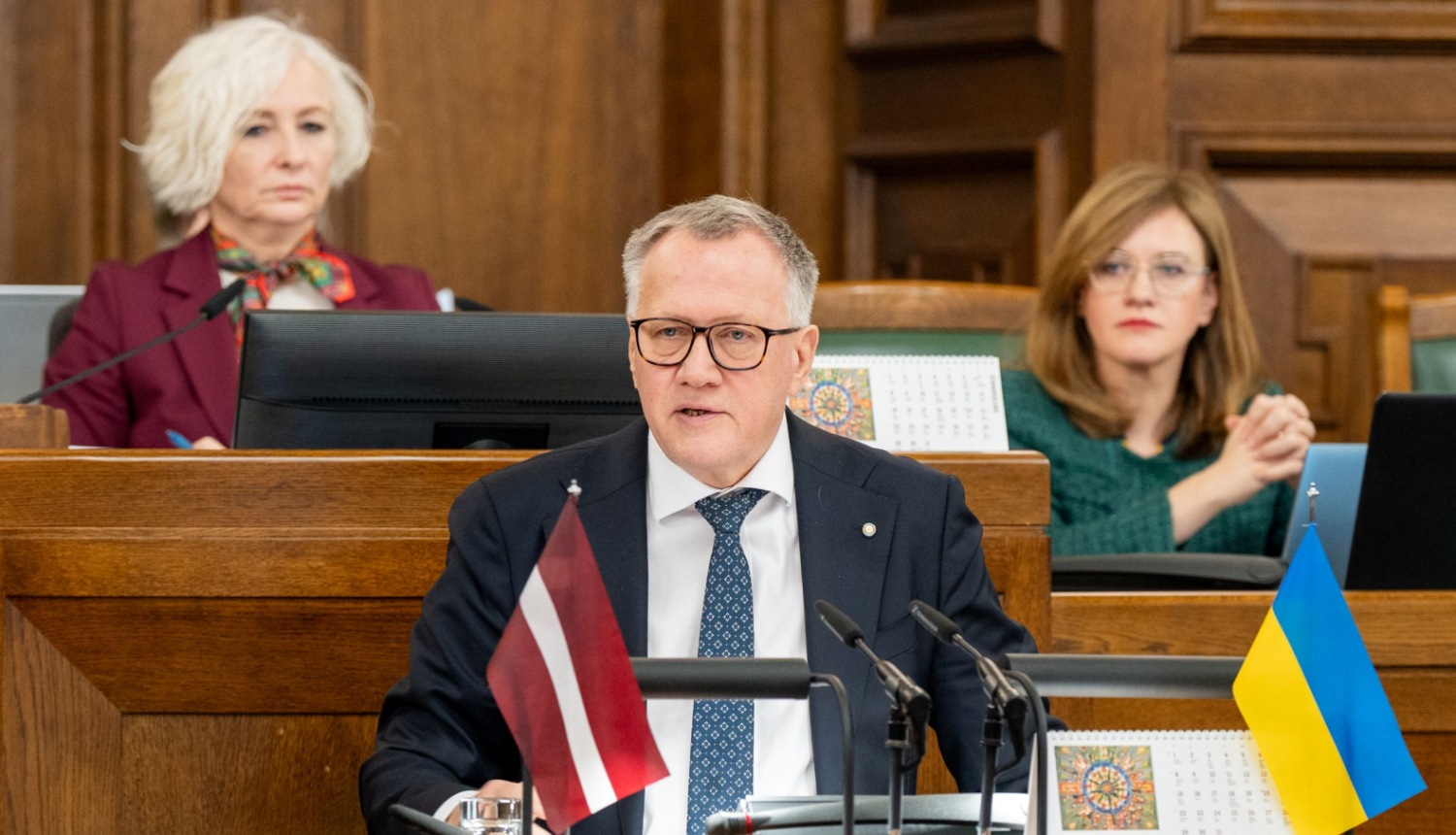
On Thursday, 4 December, Saeima adopted the State Budget for 2026 in its second and final reading. The budget confirms the government’s commitment to building a safe, socially responsible and sustainable state, placing people, their security, health and education at the centre of development. Following a review of state budget expenditure for the medium term from 2026 to 2028, expenditures have been gradually reduced by EUR 844.1 million, redirecting the savings toward financing the government’s priority areas. Approximately EUR 700 million in additional funding is allocated in 2026 for the budget’s key priorities: security, support for families with children, and education.
“The third budget of this government has been adopted! It was important to me that this budget includes 5% for defence and security. We will be the first in the Baltics to make such a significant investment. The budget also provides substantial support for families with children, for employees and pensioners, as well as lower food prices. And finally – funding for the ‘At School’ programme, which will ensure high-quality and competitive education throughout Latvia. My thanks go to everyone who contributed their work and energy so that we could jointly reach this important milestone. This is a major investment in strengthening Latvia’s security and boosting the country’s competitiveness,” said Prime Minister Evika Siliņa.
State consolidated budget revenues for 2026 are planned at EUR 16.1 billion, while expenditures are set at EUR 17.9 billion. Compared to 2025, revenues will increase by EUR 944.6 million and expenditures by EUR 804.3 million.
“The 2026 budget adopted by Saeima is nationally responsible, balanced and focused on the future security of our people and our country. It provides a clear balance between the immediate need to rapidly strengthen national defence capabilities and long-term needs – support for families with children and improving the quality of education – while maintaining economic resilience and competitiveness. This has been a challenging but fair budget that will strengthen Latvia in the long term,” emphasized Minister of Finance Arvils Ašeradens.
“The European Commission has also given a positive assessment of Latvia’s next-year budget, confirming its compliance with the EU’s fiscal discipline requirements – ensuring defence funding close to 5% of GDP and significant investment in demography and education without raising basic taxes,” noted the Minister of Finance.
Reduction of State Budget Revenue and Expenditure
Expenditure reductions in the coming years will occur gradually – by EUR 243.4 million in 2026, EUR 304.6 million in 2027 and EUR 296.1 million in 2028. In reviewing next year’s budget, the State Debt Management position was further reduced by EUR 10 million annually for the second reading, yielding EUR 30 million in savings over three years.
Compared with the 2025 plan, in 2026 state basic budget expenditure for core functions has been reduced in several ministries, including the Ministry of Finance (-16%), Ministry of Justice (-10%), Ministry of Climate and Energy (-9%), Ministry of Economics (-9%), Ministry of Foreign Affairs (-5%) and others.
To stimulate economic growth and increase household income, the government implemented a labour tax reform in 2025, reducing the tax burden for employers and employees. As a result of the reform, budget revenues will decrease by approximately EUR 1 billion over the period 2025–2028.
These measures demonstrate a systemic and responsible approach to public finance management, moving toward sustainable expenditure reduction, resource optimisation and greater efficiency across the public sector, while ensuring funding for the government’s priority areas.
Key Macroeconomic Indicators and Forecasts
The 2026 budget is based on prudent macroeconomic forecasts prepared in June of this year, projecting moderate economic growth and a gradual decline in inflation over the medium term. This year, the main contributors to economic growth are the construction, manufacturing and trade sectors. After years of stagnation, corporate lending volumes have also begun to grow rapidly, with the corporate loan portfolio in August increasing by 16% compared with August 2024. Economic growth is forecast at 1.1% this year, 2.1% for next year’s budget framework, and up to 2.2% in subsequent years.
The inflation forecast for 2025 has been raised to 3.5%, mainly due to rising food prices and heating tariffs. A gradual decline in inflation is expected in the following years – to 2.3% in 2026 and 2.2% thereafter, consistent with a converging economy.
The general government budget deficit is projected at 2.9% of GDP in 2025, rising to 3.3% in 2026 and remaining around 3.6% in the medium term. The increase in the deficit is driven by additional funding for strengthening national defence and security. These expenditures are made under the EU fiscal framework’s defence exceptional clause, allowing Member States to temporarily exceed deficit and expenditure growth limits if additional funds are directed specifically toward defence. Latvia is making use of this flexibility responsibly, maintaining fiscal sustainability and foreseeing a gradual reduction of the deficit once the exceptional clause period ends.
Additional Funding for National Priorities
Next year, EUR 448.3 million will be allocated to strengthening national security, including investments in military capabilities, internal security and cybersecurity, procurement of equipment and machinery, training of soldiers and National Guard members, development of anti-mobility and border protection systems, and support for the defence industry and border municipalities. Under NATO’s definition, Latvia’s defence spending will reach 4.9% of GDP in 2026 and 5% of GDP in 2027, decreasing to 4.9% in 2028.
Additional funding of EUR 94.8 million in 2026 is planned to strengthen support for families with children, improve material support for children in out-of-family care, and enhance healthcare services. The childbirth benefit will increase from EUR 421.17 to EUR 600, while the childcare benefit will rise from EUR 171 to EUR 298 per month. Support for guardians and adoptive parents will also be increased, including raising the monthly guardian allowance from EUR 54.07 to EUR 298 and the one-time adoption allowance from EUR 1,422.87 to EUR 2,433. Guardians who are not employed will be covered by state social insurance.
In healthcare, additional funding will expand state-funded outpatient and inpatient services and improve access to medicines. Nearly EUR 10 million will be allocated to expand reimbursable medicines, introduce reimbursement of pharmacist service fees for prescription medicines up to EUR 10, and exempt persons with first-group disabilities from these fees. A total of EUR 20.9 million will support maternal and child healthcare, family planning services, early diagnostics and treatment. An additional EUR 4 million will expand access to palliative care, including home-based services. A further EUR 4.8 million is planned to strengthen rural family doctor practices.
To ensure access to high-quality education for children across Latvia regardless of place of residence or school size, additional funding will be provided to the education sector. EUR 45 million is planned for the introduction of the new teacher remuneration model “Programma skolā”, including support staff remuneration.
Additional support is also planned for other measures, including aid for farmers to strengthen sector competitiveness and ensure access to quality local food products. Funding is also foreseen to provide healthy school meals made from local produce.
In the labour domain, the non-taxable minimum will be raised by EUR 40 next year, reaching EUR 550 per month. The minimum wage will increase from EUR 740 to EUR 780.
Investments in National Economic Growth
EU funds and Recovery Fund investments will remain one of the key drivers of Latvia’s economic growth in 2026, exceeding EUR 1 billion. By 2026, more than EUR 2.5 billion in Cohesion Policy 2021–2027 funding has already been committed for implementation through 2030. In autumn 2026, the implementation of Recovery and Resilience Plan reforms and investments will be completed, enabling Latvia to receive the full available EU funding of EUR 1.97 billion into the state budget.
Significant funding is also allocated for the development of the Latvian Oncology Centre (RAKUS). EUR 69.2 million is required to complete the construction contract, including EUR 20.8 million for phase one (operating block development) and EUR 48.3 million for phase two (renovation of inpatient facilities). Most of the funding is planned to come from the European Regional Development Fund.
Important financial support is also planned from the Swiss financial assistance programme – a total of EUR 49.8 million, including EUR 42.4 million in Swiss grants and EUR 7.4 million in state co-financing, with investments implemented through 2029. Funds will support paediatric oncology, remediation of contaminated sites, applied research, and development of work-based learning.
Under the new EEA and Norway Grants period, Latvia will be able to invest more than EUR 100 million until 2031 across three priority areas: Local development and resilience (EUR 43 million) to implement the government’s key priority “National Security”, including civil protection infrastructure, creation and upgrading of shelters, and installation of generators to ensure uninterrupted power supply to critical healthcare and social care institutions; Green Innovation (EUR 27.5 million) to support businesses and remediation projects; and the Corrections Programme (EUR 15 million) to support the construction of a women’s prison, strengthen correctional services and provide rehabilitation services to children with addiction disorders.
Cooperation with Partners and Municipalities
To strengthen social dialogue, the government actively cooperated with social and cooperation partners as well as municipalities. This dialogue has resulted in several agreements and significant improvements to municipal financial stability and development.
Municipalities are projected to see stable tax revenue growth in the coming years – in 2026, revenues including compensation will increase by EUR 151.4 million or 6.1%. The personal income tax forecast for municipalities is guaranteed in full, while revenue exceeding the guaranteed level will be directed toward debt repayment, strengthening local government financial sustainability and supporting balanced regional development.
Saeima has also maintained its commitment not to raise basic taxes, making only those adjustments that serve the public interest. Specific measures are planned to support residents – for example, reducing VAT on essential food products and increasing excise duty on harmful goods to promote public health and reduce inequality.
The budget has been prepared responsibly and to a high standard, receiving a positive assessment from the European Commission. In its opinion published on 25 November, the Commission concludes that Latvia’s 2026 budget plan complies with EU fiscal discipline requirements. Latvia ensures defence spending close to 5% of GDP, significantly increases funding for demography and education, does not raise basic taxes, and achieves all of this within the constraints of EU fiscal rules.
The adopted state budget is grounded in responsible fiscal planning, priority investment allocation and the aim of strengthening national security, welfare and sustainable growth.
The budget package includes and adopts 47 budget-related draft laws.